Make the first action obvious.
Start at the moment someone asks the system to do something. State the action, the response and the next visible decision.


A FIELD GUIDE FOR FULL-STACK ENGINEERS / ISSUE 01
Short engineering sessions for people who want to make browser behavior, service choices, data shape and deployment checks visible to another human.
THE BUILD CHAPTERS
Not a course catalogue. Each chapter is a practical place to look when a small system needs a clearer next move.
Start at the moment someone asks the system to do something. State the action, the response and the next visible decision.
Sketch the input, the service choice and the shape of a useful refusal before you turn it into a large architecture.

Use ownership, validation and one recoverable record to make a future query less mysterious.
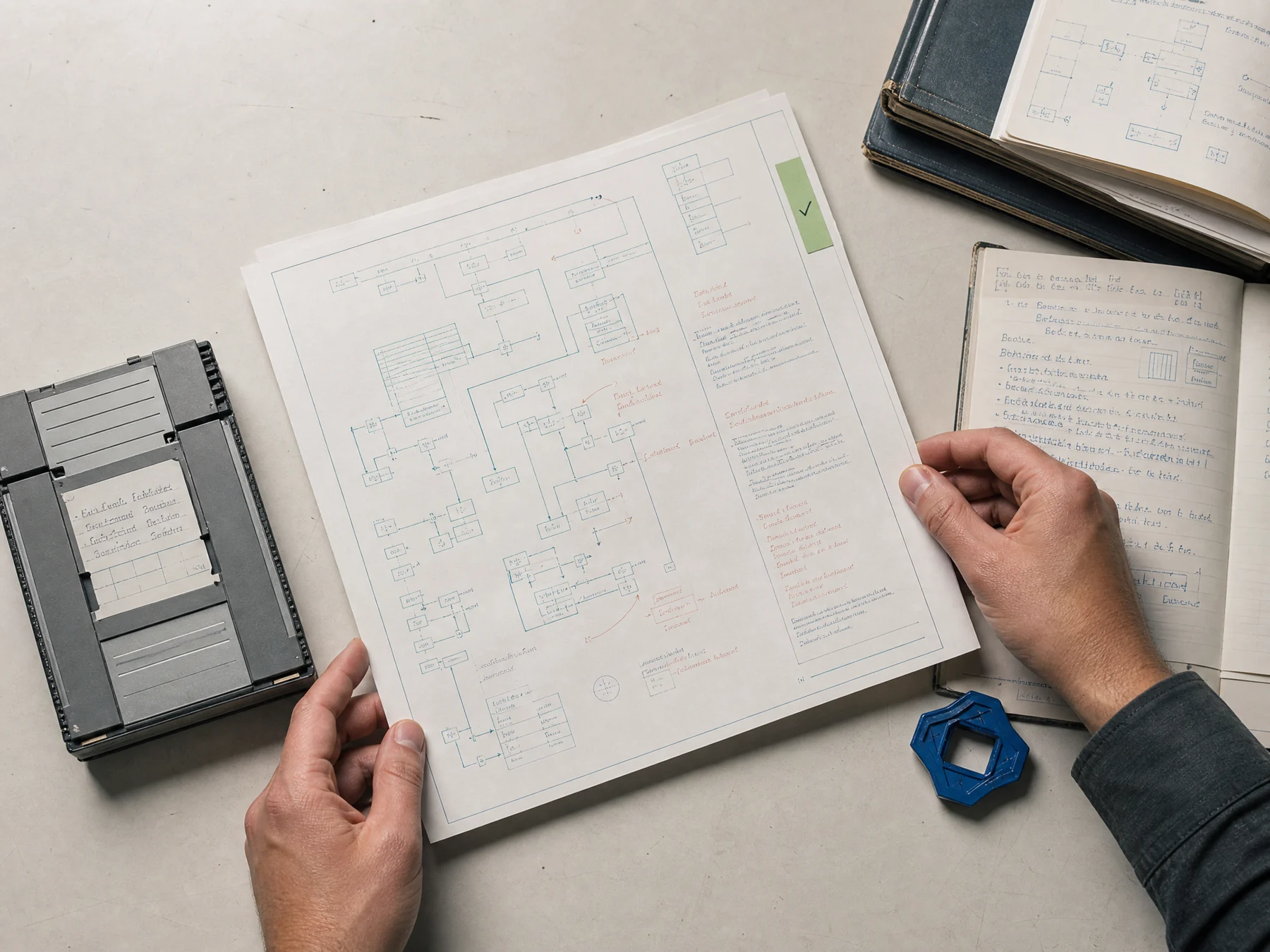
A build is easier to hand on when its version, environment, check and recovery note appear in the same place.

START WITH A PERSON
Ask what the person can see, what they can do next and what the system should never pretend has happened.
DEBUG PROMENADE / WALK THE TRACE
A trace does not need to start in a console. It can start at the table, the request, the record or the release receipt.
AT THE SCREEN
Recreate the path, identify the expectation and notice what the person sees after the click.

AT THE TABLE
Move request, decision, record and response into one shared sequence before discussing fixes.
AT THE RECEIPT
A useful release note gives someone an environment, a version and one check that can fail clearly.
PAIR BENCH / THREE KINDS OF HELP
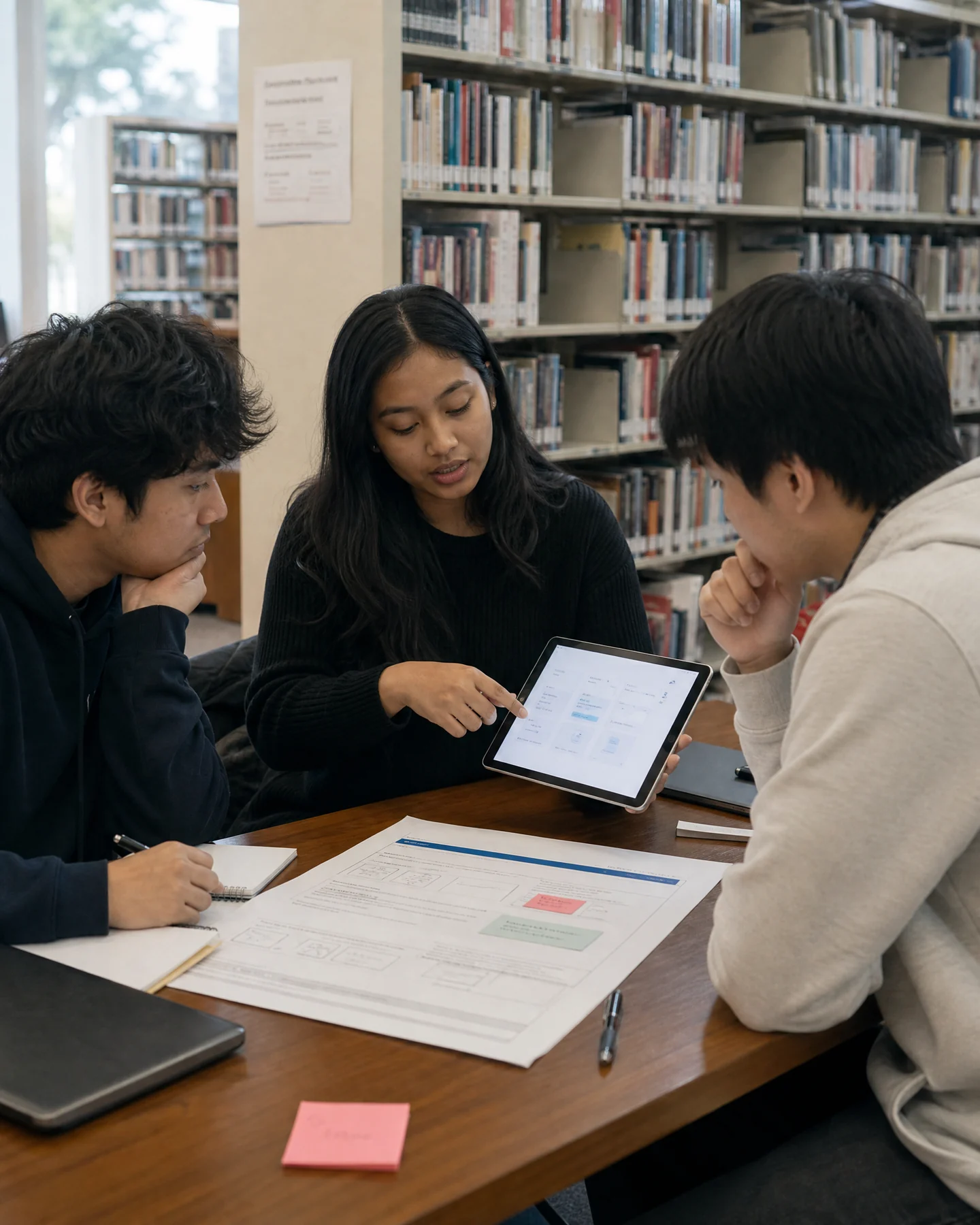
These sessions are designed around one artifact already in motion, not an imagined app from a slide deck.
BENCH CARD / 01
Bring one path that surprises you. We track its actual behavior, name the uncertain boundary and record the next safe test.

DISPATCH WALL / EVERY BUILD LEAVES A MARK
Tap a strip to bring one observable delivery practice into focus. The strips are prompts, not a score for your work.
INPUT CARD
Use a named action, a visible expectation and one condition you are not yet sure about. The first receipt makes later tracing much calmer.
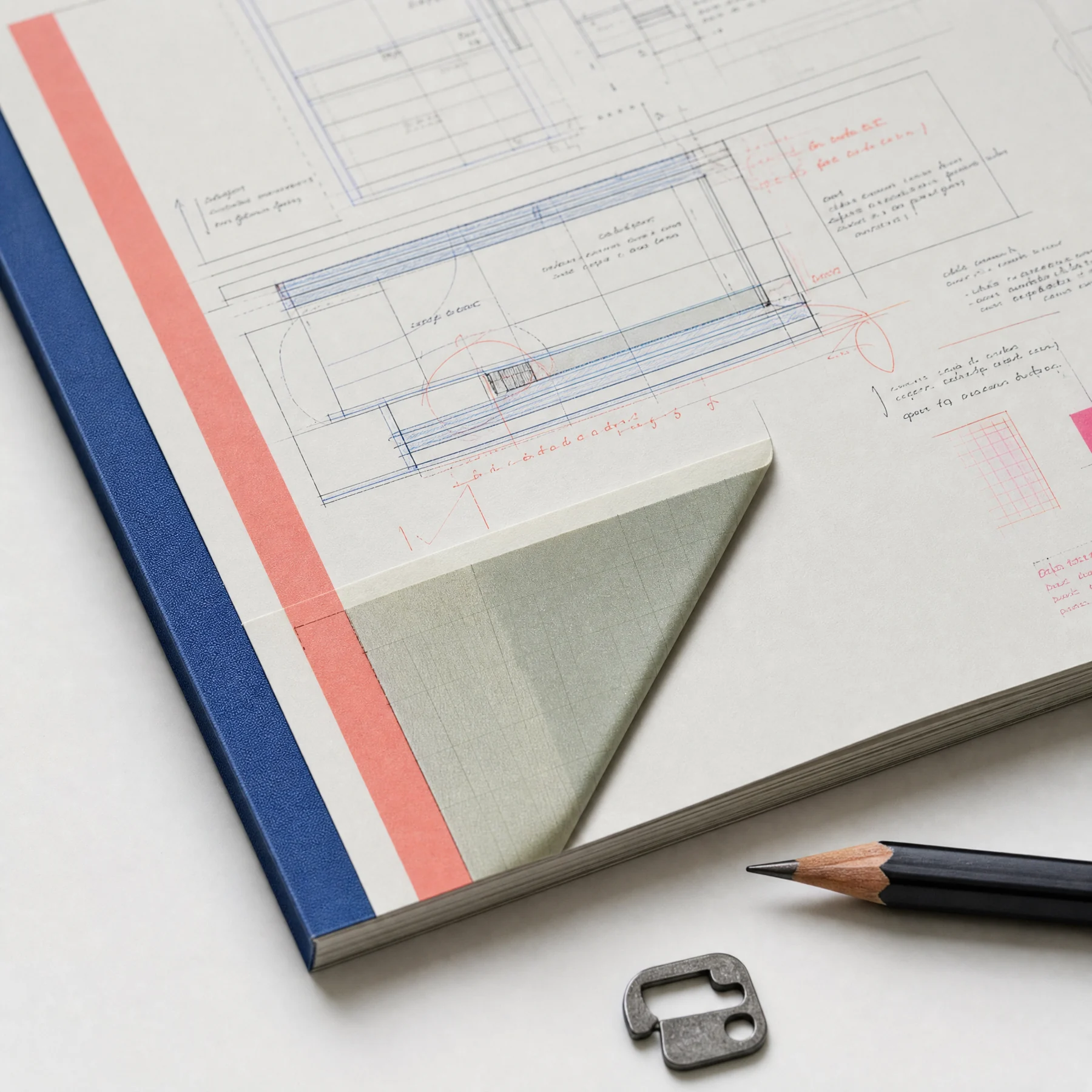
Field log / keep a mark beside the decision.
THE MARGIN IS PART OF THE SYSTEM
Small annotations make practical learning cumulative. A note can hold a missing assumption, a useful naming choice, a strange response or the person you need to ask next.
INSTRUMENT CABINET / PRACTICAL QUESTIONS
Search the short prompts below. This is not a generic FAQ; each card is an engineering check to carry into the next working session.
No check matches that phrase. Try a system word such as “state” or “release”.
One action, the response it creates, the current state and the expectation that is being tested.
Small enough to name its input, decision, response and useful failure without using a diagram as a substitute.
The version, environment, human-readable change, one repeatable check and a short recovery clue.
A small working path, an honest uncertainty and a concrete question. Do not send confidential production data.
OPEN BENCH / SEND A BUILD QUESTION
Tell us what is moving, where it becomes uncertain and what you would like to make observable. Wudepaxi is an educational resource, not a job-placement or outcome guarantee.
Remove credentials and confidential production information.
Name the current behavior in one plain sentence.
Say what a useful next check would help you decide.